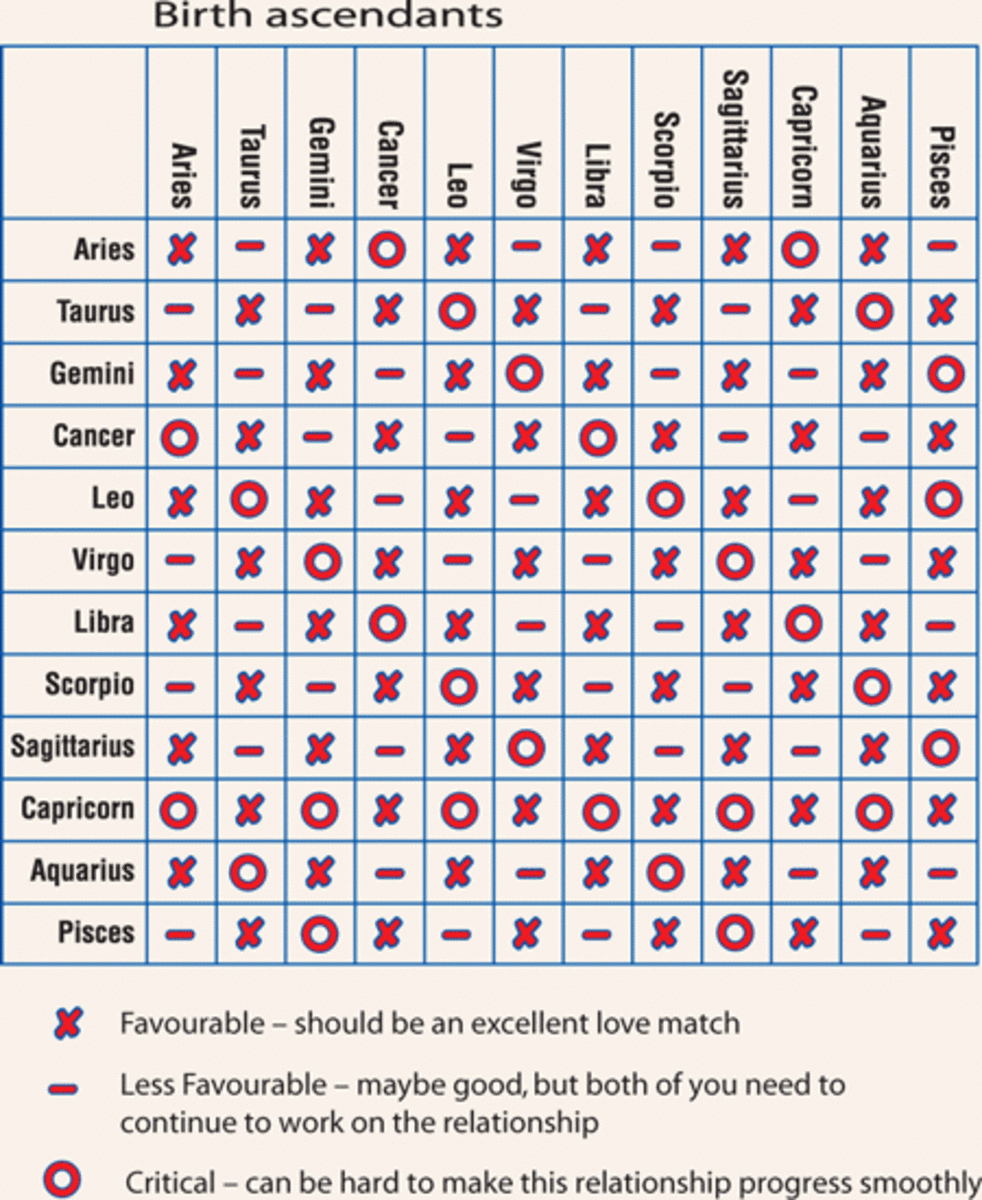
Understanding Compatibility: How Personal Preferences Influence Relationship Dynamics
In the realm of relationships, compatibility is often viewed as a pivotal factor that determines the success or failure of a partnership. Understanding how personal preferences shape relationship dynamics is crucial for fostering healthy connections. Factors such as communication styles, lifestyle choices, and emotional needs play significant roles in compatibility. For instance, a couple who shares similar interests and values may find it easier to navigate challenges together, whereas differing preferences can lead to misunderstandings and conflict. Recognizing these variances allows individuals to approach their relationships with greater empathy and awareness.
Moreover, personal preferences encompass a broad spectrum of elements including cultural backgrounds, hobbies, and even future aspirations. These aspects not only influence day-to-day interactions but also dictate long-term compatibility. Couples who actively engage in open dialogues about their preferences can cultivate a deeper understanding of one another, enhancing their relationship dynamics. Ultimately, acknowledging and respecting personal preferences not only enriches the partnership but also lays the foundation for a stronger bond built on mutual understanding and compromise.
Counter-Strike is a popular tactical first-person shooter game that has captivated millions of players worldwide. It emphasizes teamwork, strategy, and precise shooting skills as players take on the roles of terrorists and counter-terrorists. For those who also enjoy gaming on mobile devices, check out the Top 10 Android Charging Cables to ensure your phone is always ready for a gaming session!
The Science of Attraction: Do Your Preferences Really Matter?
The science of attraction is a fascinating field that combines psychology, biology, and sociology to understand what draws us to certain individuals. Research indicates that our preferences for partners are often influenced by a complex interplay of factors, including physical appearance, personality traits, and even cultural background. Preferences can be shaped by past experiences and societal norms, leading us to develop specific ideals that often guide our choices in relationships.
However, the question arises: do these preferences really matter when it comes to forming emotional connections? While having a type can help narrow down potential partners, studies suggest that the science of attraction may also involve subconscious factors that we are not fully aware of. For instance, proximity and similarity often enhance attraction, even if they don't align perfectly with our stated preferences. Ultimately, understanding the dynamics of attraction helps us recognize that, while preferences play a role, there are many layers to what makes us connect with others.
Are Opposites Attract? Exploring Compatibility Through Preferences
The question of whether opposites attract has intrigued psychologists and relationship experts for decades. While popular culture often romanticizes the idea of two contrasting personalities coming together to form a passionate bond, research suggests that compatibility may be more complex. Various studies indicate that individuals are often drawn to partners who share similar preferences in values, interests, and lifestyles. This phenomenon, known as the similarity-attraction effect, highlights that while differences can be exciting, shared traits often foster deeper connections and understanding.
However, it is essential to recognize that not all opposites are doomed to fail. Certain differences might enhance a relationship by allowing each partner to grow and develop new perspectives. For instance, a couple where one partner is extroverted and the other is introverted can create a balanced dynamic that encourages each person to step out of their comfort zone. Ultimately, exploring compatibility through preferences involves a delicate dance between similarity and difference, where the key lies in mutual respect and understanding, enabling both partners to thrive.